01
Two against two
Two pairs play, two players on each side. Keep an eye on your partner too!
 Sign up
A new game · A shared experience
A racket sport where the walls are part of the game.
Doubles play, exciting rallies and new challenges.
Find out why it is worth stepping onto the court!
It starts on the court. Together it becomes an experience.
2 × 2players on court
10 × 20 mcourt size
Max. 1bounce before returning the ball
WHAT IS PADEL?
Padel is played in doubles on a court enclosed by walls and fencing. The net and the scoring may be familiar from tennis, but the glass walls open up new possibilities: the ball can stay in play after coming back off the wall.
The basics are easy to learn, but there is always room to improve. It is not only about power: positioning, good decisions and teamwork with your partner matter too.
For children, adults and corporate communities — with different goals and the same joy of the game.
THE EQUIPMENT
A padel racket has a short handle, no strings and a perforated hitting surface. As a beginner, the aim is not the hardest shot but controlling the ball and hitting it reliably.
When choosing a racket, the right weight and a comfortable grip are important; for children, choose a racket that suits their age and build.
A DISTINCTIVE PART OF OUR METHOD
AXISPORT · Exclusive distributor of Spinfire in Hungary
We deliberately build the Spinfire professional padel ball machine into our sessions. Repeatable balls help you practise accurate strokes, good positioning and well-timed reactions.
Combined with Erik’s feedback, machine practice helps lock in correct movements and supports more confident play. The machine does not replace the coach.
More repetitions · More precise play
VIEW FROM ABOVE
Two halves, four players and a wall that does not necessarily mean the end of the rally.
Illustrative court diagram. Player positions are not fixed.
1–2: the two back glass walls · 3–6: four side glass sections at the corners.
━ Turquoise: glass wall · ┄ Gold dashed: wire mesh
An illustration of a common, symmetrical court layout. The six wall sections do not mean six glass panels: a section can consist of several panels. The number of panels and the design of the walls can vary from court to court; the top view does not show the mesh above the walls.
HOW IS IT PLAYED?
The most important things to know before your first rally.
01
Two pairs play, two players on each side. Keep an eye on your partner too!
02
After bouncing the ball, hit it at or below waist height into the diagonal service box. You have two attempts.
03
Return the ball before it touches the ground a second time. Volleys are allowed, but when receiving a serve, wait for the bounce.
04
During a rally, a ball that bounces on your side and then comes back off the glass wall or the wire mesh can still be played before it touches the ground a second time.
05
On your opponents’ side, the ball must hit the ground first, not the wall or the fence directly.
06
Scoring familiar from tennis. A standard set needs six games and a two-game lead; at 6–6 a tie-break follows.
Depending on the chosen rule set, advantage play, a golden point or another permitted scoring method may follow. Agree the format before you play!
This is a summary for beginners, not a complete rulebook. The detailed rules are set out in the International Padel Federation rules (PDF) ↗.
Playful start
Thoughtful progress
PADEL FOR CHILDREN
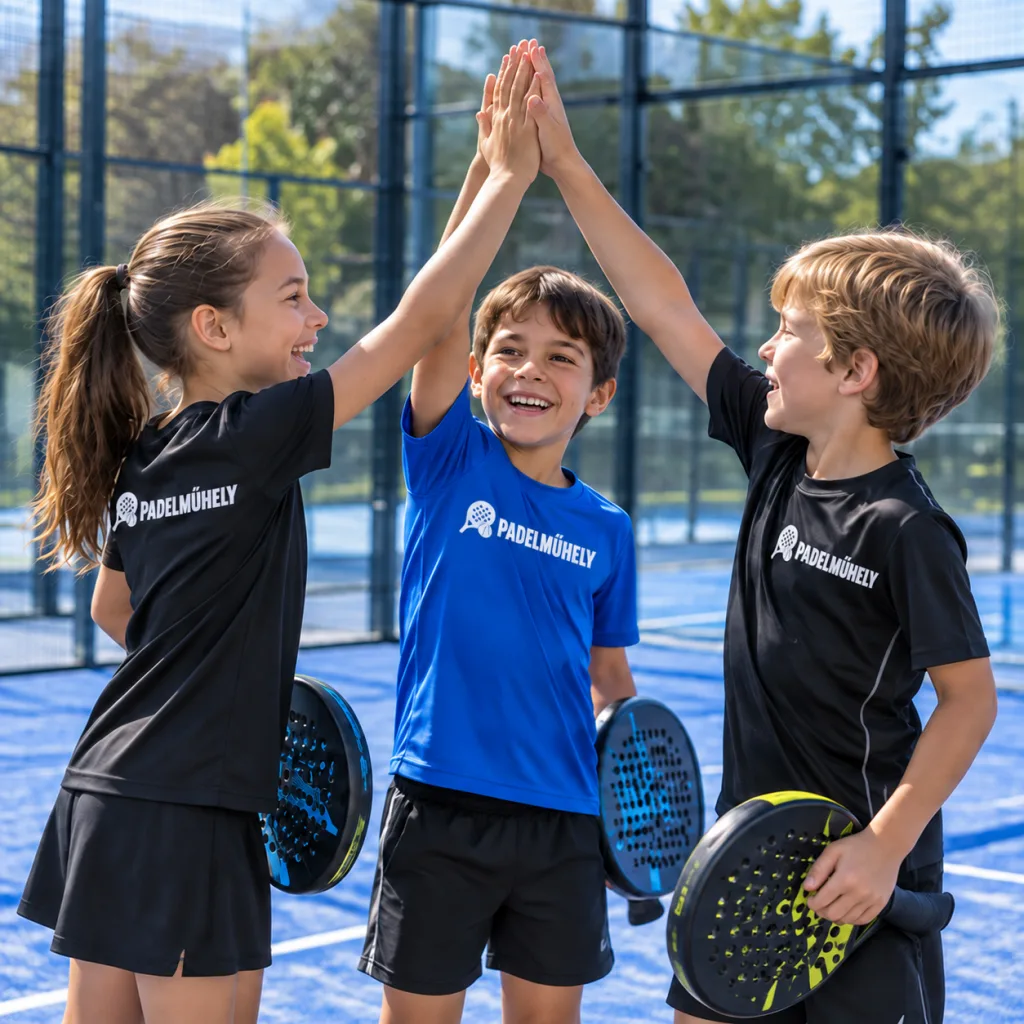
The game combines physical, thinking and team challenges all at once.
Tracking the ball, changing direction, hitting: plenty of ways to practise coordination.
Where will the ball land? Where should we hit it back? Every rally is a new situation.
In doubles, communication and helping each other matter too.
Even a well-hit ball or a longer rally can bring a sense of achievement.
A LITTLE BACKGROUND
Padel was born in Mexico in 1969. Today you can find it in Hungary too — the next rally in the story could be yours.
NOW IT’S YOUR TURN
Three programmes, three ways to start. Find the one that suits you!
Background sources:
BVSC – introduction to padel (in Hungarian)·
LTA – getting to know the sport·
FIP – rules and regulationsWe only use cookies that are necessary for the site to work: for Members login, and one cookie to remember your choice. We would only use statistics or marketing tools with your consent – we currently use none. You can change your choice at any time with the “Cookie settings” button. Privacy notice